LBN 331 - Omicron Cygni
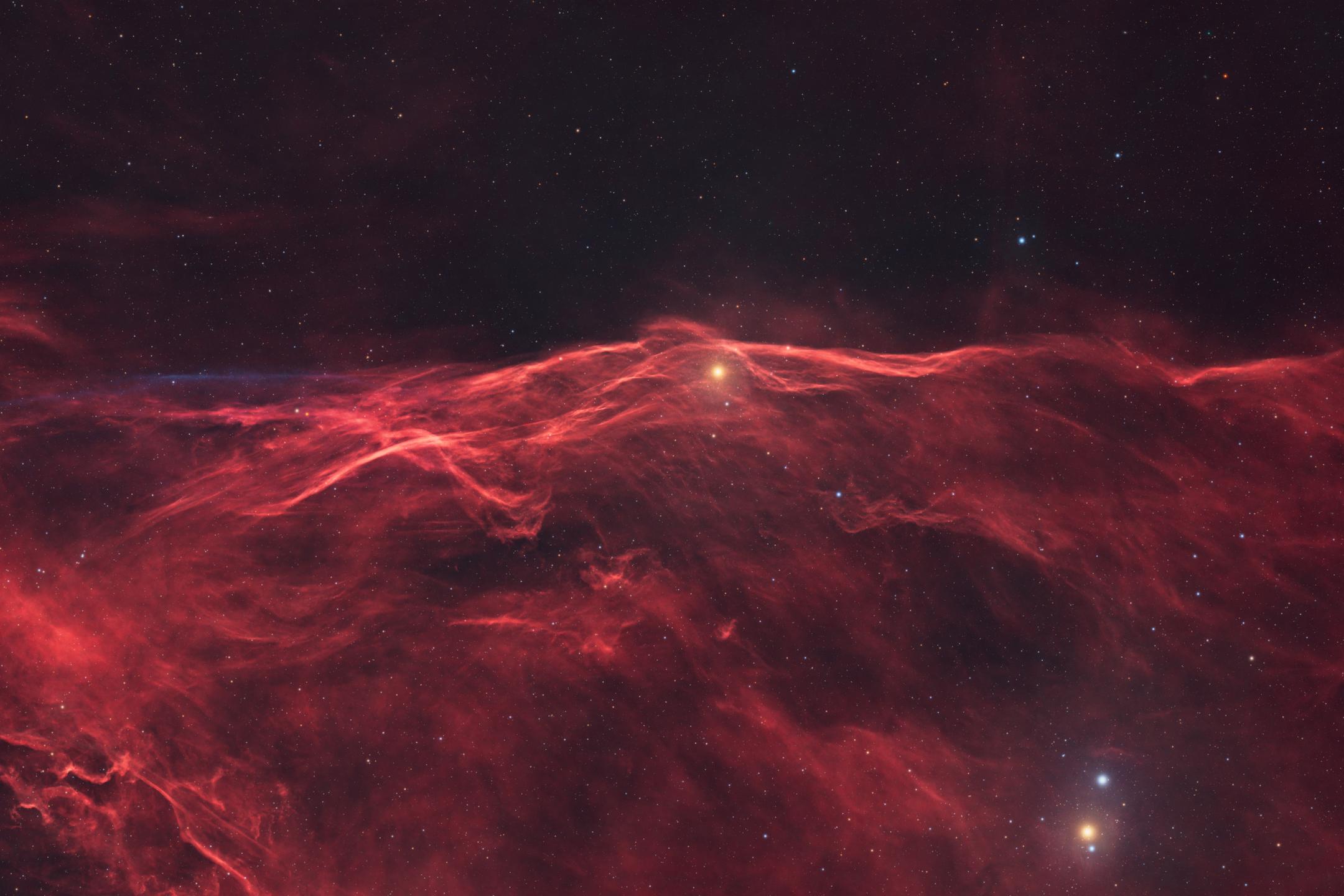
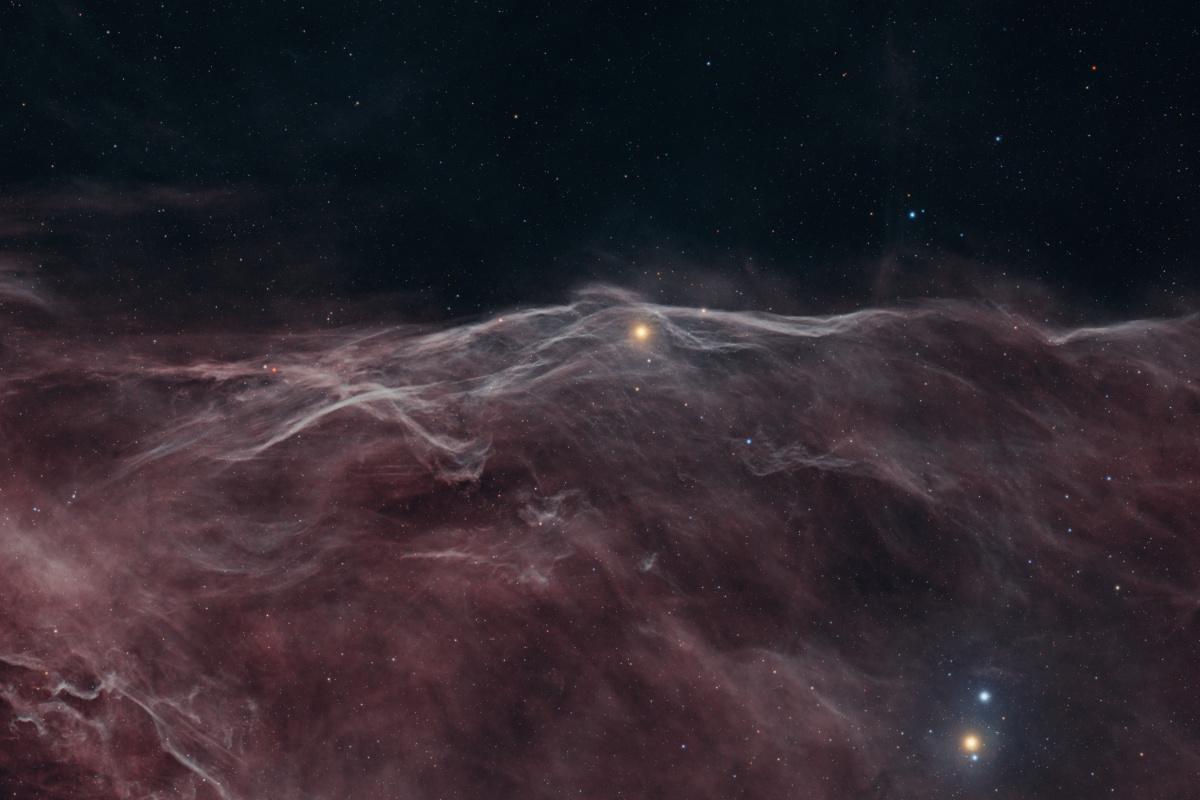
A narrowband HOO capture of LBN 331 beside Omicron Cygni, rotated off the usual diagonal so the bright arc reads as a ridgeline with the rest of the field falling away beneath it.


The object
LBN 331 sits beside Omicron Cygni, at the western end of the Cygnus star clouds. It does a convincing impression of a supernova remnant, all arc and shell and broken filament. It isn't one.
This field is almost always presented on the diagonal. Rotating it horizontal changes what it is: the bright arc becomes a ridgeline, and everything under it drops away as ground. Less object floating in a frame, more landscape.
The same data in HSS
The same field again, mapped to HSS: Hα to red, SII into both green and blue. It's the inverse trade of the HOO version - there the sulphur only ever reaches the luminance and never the colour, here it's the OIII that sits out and SII finally gets a channel of its own.
Hα keeps the red. Where SII holds up the filaments go pale, so the structure reads before the colour does - the grey is the sulphur, running along the ridge and through the filaments rather than sitting in the body of the cloud.
HOO leads here, but I haven't settled it. The HSS suits the cirrus impression better than the HOO does, and I'm still deciding which one I prefer.
Capture notes
Twelve hours each in Hα, OIII and SII, plus an hour per RGB channel for the stars. The palette is HOO, so SII never makes it into the colour, but it does feed the luminance, which is synthetic and built from all three narrowband channels.
Processing
Stars are RGB, swapped in rather than stretched out of the narrowband, which keeps the field looking like Cygnus instead of the usual narrowband confetti.
The synthetic luminance carries the structure, so the colour could stay restrained - enough separation between the Hα arc and the OIII behind it to read the depth, without pushing either into something the data doesn't support.